
How Ecofleece Works
Ecofleece is a canopy-level grease filtration system designed to intercept airborne grease before it enters ductwork and extraction fans.
Installed directly within the canopy above cooking appliances, Ecofleece uses specially prepared wool filtration media to capture grease at the point where it is generated.
By capturing grease at the canopy, Ecofleece helps reduce grease accumulation within ductwork and supports cleaner, safer commercial kitchen environments.
Traditional metal baffle filters used within canopies typically allow a significant proportion of airborne grease to pass into the extraction system. Ecofleece works differently, using the natural properties of wool fibres to interact with grease particles and retain them within the filter.
How Ecofleece Captures Grease

Wool fibres have a complex structure that interacts naturally with grease particles.
As grease-laden vapour rises through the Ecofleece filtration media:

Air passes through the wool filter

Grease, odour and vapours adhere to wool filter structure

Grease accumulates and is condensed within filter media
Unlike conventional baffle filters, which rely primarily on airflow direction and inertia, wool filtration utilises fibre surface interaction to retain grease particles.
This fibre-based mechanism helps intercept grease before it can propagate into ductwork.
How Ecofleece Captures Grease at the Canopy
Commercial cooking generates large volumes of grease-laden vapour.
As this vapour rises into the kitchen canopy, it normally passes through metal baffle filters before entering the duct system.
While baffle filters remove between 20-35% of grease through inertial separation, much of the airborne grease continues into the ductwork where it accumulates over time.
Ecofleece changes where grease interception occurs.
Installed directly within the canopy, Ecofleece wool filtration media captures grease at the point where it is generated.
Operational cleaning observations indicate that Ecofleece filtration media may capture up to 98% of airborne grease* in certain environments.
By capturing grease earlier in the extraction system, Ecofleece helps reduce grease accumulation within ductwork and supports improved visibility of grease build-up.
How Ecofleece Performs In Commercial Kitchens
Wool filtration media works because wool possesses several natural properties that make it particularly effective for grease interception in commercial kitchen environments.
These include:
- natural affinity for oils and fats (oleophilic behaviour)
- complex fibre surface that traps grease particles
- stability in high heat environments
- natural flame-resistant behaviour
Together, these characteristics allow wool filtration media to capture airborne grease while performing reliably in demanding kitchen extraction systems.
Wool is inherently flame resistant due to its natural composition, making it ideal for use in commercial kitchen extract systems. Ecofleece has been rigorously tested and certified to perform reliably in demanding kitchen conditions.

Grease affinity

Moisture regulation

Heat stability
Wool's key fire behaviour characteristics include:
- high nitrogen content
- high ignition temperature
- low heat release rate
- self-extinguishing behaviour
Unlike thermoplastic synthetic materials, wool does not melt or drip when exposed to flame.
Ecofleece filter assemblies incorporating wool filtration media have been tested and certified to the UL 1046 standard, a recognised performance standard for grease filters used in commercial kitchen extract systems.
UL 1046 evaluates grease filters under controlled fire exposure conditions, including:
- flame penetration resistance
- flame spread behaviour
- structural integrity under fire conditions
All of these characteristics help support safer filtration performance within commercial kitchen extraction systems.
Please note:
Testing, certifications and technical reports may reference WoolGuard or Naturalsorb. These are equivalent wool-based filtration media and trading names of Kiwibond International Ltd, representing the same technology as Ecofleece filters.
How Ecofleece Is Installed
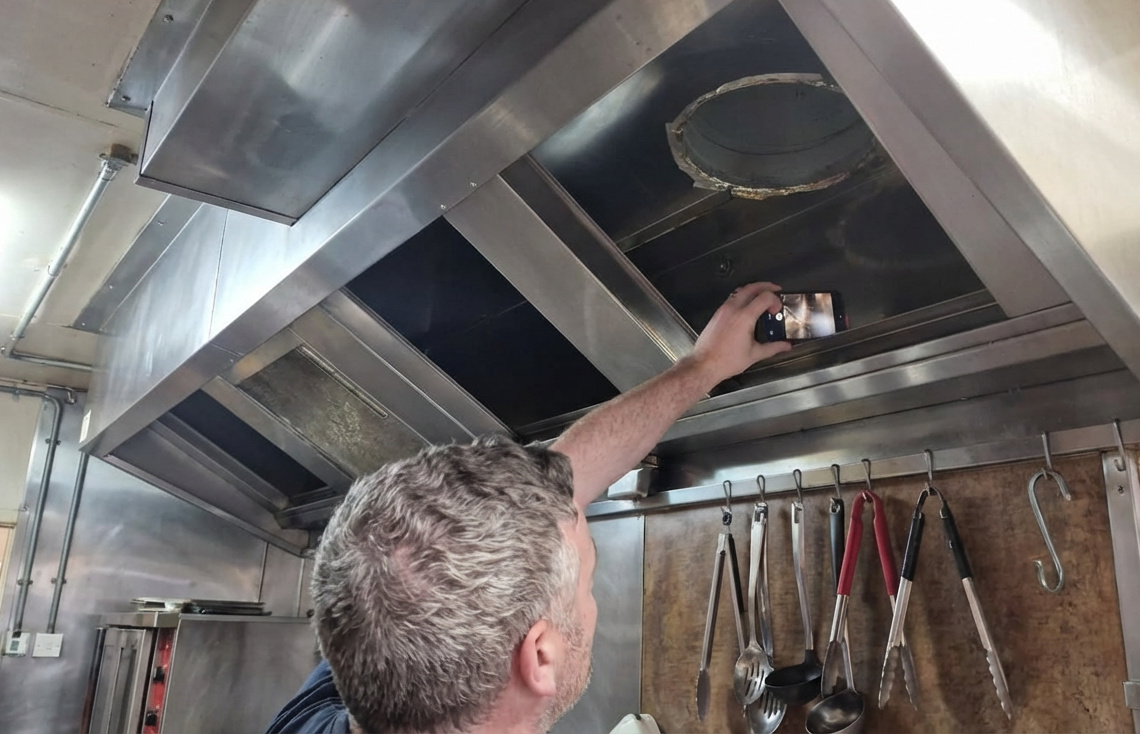
Ecofleece filters are designed to integrate directly into existing canopy frameworks, providing an immediate upgrade to grease‑management performance without requiring structural changes or specialist modifications. Their retrofit design allows them to be fitted quickly and cleanly, making them suitable for both new and established extraction systems while maintaining normal kitchen operation.
Before installation, an Ecofleece specialist carries out a suitability survey to confirm that the system is appropriate for your kitchen extract setup. This includes assessing baffle filter sizes, airflow rates, fan performance, and cooking conditions to ensure the system can operate effectively. We also review current system performance and identify any factors that could impact efficiency, safety, or compliance, ensuring Ecofleece is correctly specified and delivers reliable, consistent results from day one.

Survey
System assessed before installation to ensure suitability and safe operation.
- Filter sizing compatibility confirmed
- Extract fan performance and airflow rates reviewed
- Ductwork cleanliness and condition assessed
- Cooking appliance line-up and grease load evaluated
- Suitability for Ecofleece confirmed

Plan
A tailored maintenance plan is developed based on cooking activity, grease production and operational requirements.
- Cost-benefit analysis produced
- Recommended wool pad replacement frequency established
- TR19 Verification of Cleanliness inspection intervals confirmed
Maintenance support or approved maintenance partner recommended - Ongoing compliance strategy agreed

Install
Ecofleece is installed into a clean and compliant extract system.
- Ecofleece wool media and overframes installed
- Airflow and fitment checks completed
- Operational guidance provided
- Staff training and system handover completed

Monitor
System performance is reviewed after installation and periodically thereafter to validate grease capture performance, maintain compliance and support insurance requirements.
- Post-installation performance review completed
- Wool replacement frequency validated and adjusted if required
- Confirmation that appropriate TR19 Verification of Cleanliness inspections are being maintained
- Support ongoing compliance and system effectiveness
A structured approach from installation to ongoing compliance
How Ecofleece Is Maintained
Ecofleece filters are designed to make grease management visible, controlled and easy to maintain.
Designed to be Simple
Ecofleece wool filters are built for straightforward, day-to-day use.
No complex systems. No fixed schedules. No guesswork.
Filters are replaced based on what you can see, helping kitchens manage grease more effectively and with greater control.

Visual Monitoring - Clear colour change shows when filters need replacing

Flexible Maintenance - No fixed schedule, based on real use

Easy to Manage - No tools or specialist processes required
Know When a Filter Needs Changing
Ecofleece filters darken as they capture airborne grease, providing a simple visual indicator.
Newly Installed

Active Capture

Heavily Loaded

Ready to Change

The wool darkens naturally, making replacement timing easy to identify.
How Often Are Filters Changed?
There is no fixed schedule.
Frequency depends on:
- Cooking volume
- Food type
- Equipment
- Peak periods
Your Ecofleece Partner will set an initial schedule, which can be adjusted based on real use.
Ecofleece adapts to your kitchen, not the other way around.
Cleaner Systems, Simpler Routine Care
Ecofleece captures grease before it enters ductwork, helping to keep systems cleaner.
This results in:
- Cleaner baffle filters
- Easier canopy maintenance
- Reduced visible grease build-up
From Reactive Cleaning to Preventative Control
Traditional systems manage grease after it enters the system.
Ecofleece captures grease earlier, at canopy level.
Ecofleece
Duct Cleaning
Traditional
- Grease enters system
- Build-up forms
- Deep cleaning required
Ecofleece
- Grease captured early
- Reduced build-up
- More controlled maintenance
Top Tips & Best Practice
Simple habits help maximise performance and extend filter life.

Wipe down as you replace
Use the back of the used filter to wipe baffles before installing a new one

Rotate filters
Move filters from high-use to lower-use areas to extend life

Check regularly
Visual checks help you stay ahead of replacement

Keep spare filters
Avoid delays during busy periods

Replace based on appearance
Follow visual change, not time
Important Use Considerations
Ecofleece filters must not be exposed to direct flame or excessive heat.
Be mindful with:
- Flambé cooking
- Wok frying
- Open gas appliances
- High-heat adjacent equipment
- Maintaining a minimum 45cm gap between the Ecofleece filter and the cooking appliances below
Best Practice:
- Use minimal alcohol when flambéing
- Avoid excess moisture in hot oil
- Remove woks gradually from heat
- Ensure equipment is correctly fitted
Kitchen operators are responsible for ensuring that cooking practices do not expose filters to excessive heat or flame.
Ecofleece filters are not designed for direct flame contact. Misuse may affect performance and warranty.
How Ecofleece is Disposed of
Ecofleece wool filtration media is made from natural wool and does not contribute microplastics to landfill. Wool can begin to biodegrade within 90 days in suitable soil or landfill conditions.
Once used, Ecofleece pads capture cooking grease, oil, and kitchen extract residues, so they should be treated as grease-contaminated waste.
Used pads should be removed carefully, placed directly into the appropriate waste container, and disposed of in accordance with local waste regulations.

Learn More About Ecofleece
Understanding how Ecofleece works is only part of the story.
Explore the science behind wool filtration, fire safety considerations and sustainability benefits.